
Custom Boxes

7 Mistakes to Avoid When Ordering Custom Boxes

7 mistakes to avoid when ordering custom boxes for your brand

Why So Many Brands Get Custom Box Orders Wrong (And How to Fix It)

The 7 mistakes to avoid when ordering custom boxes for your brand are:

  1. Inaccurate sizing – wrong dimensions inflate shipping costs by 20-40%
  2. Poor material selection – weak materials lead to damaged products and returns
  3. Design flaws and printing issues – low resolution, wrong color modes, and bad typography hurt brand perception
  4. Skipping prototypes – approving bulk orders without physical samples risks costly reprints
  5. Ignoring lead times and MOQs – rushing orders can add a 30-50% premium to your costs
  6. Neglecting sustainability – eco-unfriendly packaging turns off modern consumers
  7. Poor unboxing experience – difficult-to-open packaging frustrates customers beyond the first impression

Custom packaging is one of the most powerful brand tools you have. It’s often the first physical thing a customer touches. And yet, for many small and medium business owners, ordering custom boxes becomes a source of stress, unexpected costs, and missed opportunities.

A skincare brand orders 10,000 units with thin paperboard to save money. The boxes arrive crushed. They reprint everything. The launch is delayed. That kind of mistake is more common than you’d think — and almost always avoidable.

The truth is, most packaging mistakes don’t come from carelessness. They come from not knowing what to look for before placing an order.

I’m Max Anderson, a packaging and backlink strategy specialist who has helped dozens of brands navigate the custom box ordering process — including the exact 7 mistakes to avoid when ordering custom boxes for your brand covered in this guide. In the sections below, we’ll walk through each mistake clearly so you can order with confidence.

Infographic showing 7 custom box ordering mistakes: sizing, materials, design, prototypes, lead times, sustainability

Simple guide to 7 Mistakes to Avoid When Ordering Custom Boxes for Your Brand:

1. Inaccurate Sizing and Material Selection

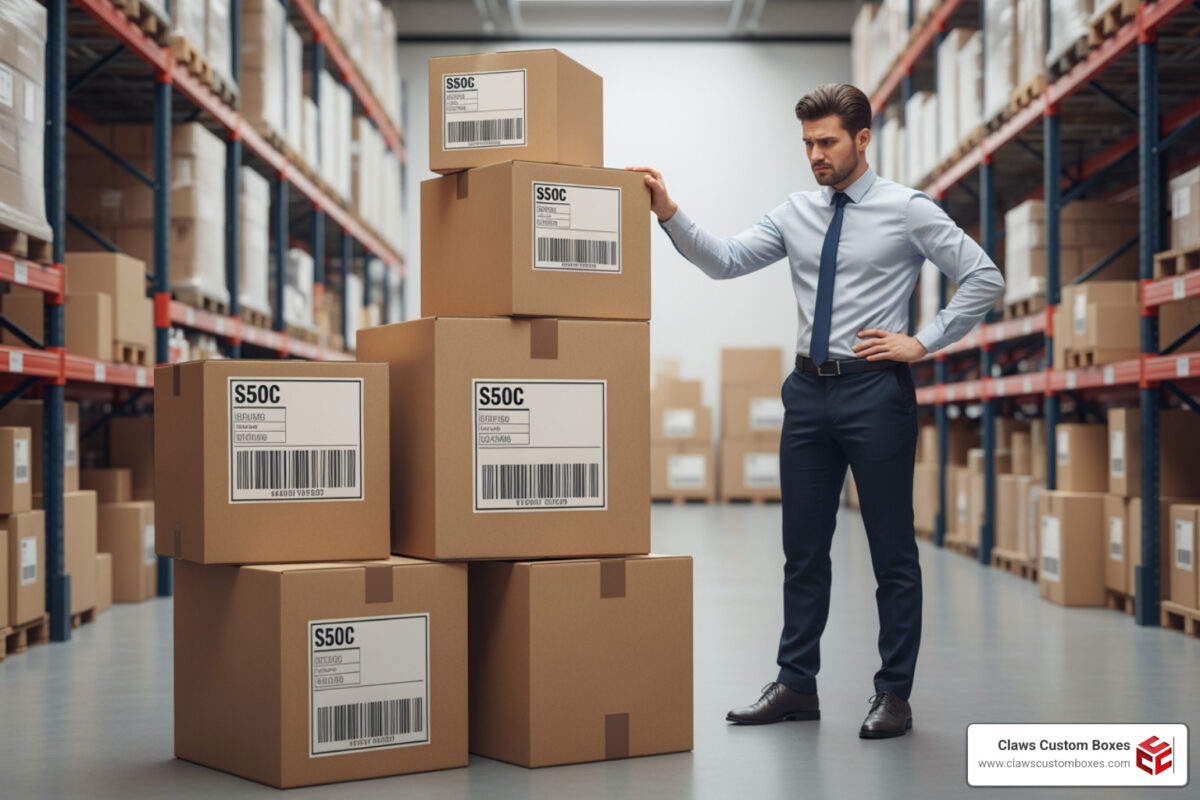
One of the most frequent and expensive errors we see in May 2026 is the “one-size-fits-all” approach to sizing. Getting the dimensions wrong isn’t just a minor inconvenience; it is a logistical nightmare. If your box is too large, your product will rattle around, increasing the risk of damage. If it’s too small, you’re looking at a complete reprint.

The Cost of “Air”

When you order boxes that are larger than necessary, you are essentially paying to ship air. Carriers use a calculation called Dimensional (DIM) weight. If your box is oversized, even if it’s light, you’ll be billed at a higher rate. Statistics show that wrong dimensions or choosing unnecessarily heavy materials can raise freight charges by 20–40%. To avoid this, you must focus on the internal dimensions of the box.

various box sizes and corrugated materials

Measuring for Success

Precision is key. We always recommend using a caliper or a precise ruler to measure your product’s length, width, and height. Remember to account for any inserts, tissue paper, or bubble wrap you plan to include. For a deep dive into the technical side, check out our guide on How to Measure Box Packaging Dimensions and learn the nuances of How to Measure the Dimensions of a Box Correctly.

Choosing the Right Material

Selecting the “first and silliest” material because it’s the cheapest is a recipe for disaster. Different products require different levels of structural integrity:

  • Corrugated Cardboard: Best for shipping and heavy items. Look at the ECT (Edge Crush Test) ranking to ensure it can handle stacking.
  • Folding Cartons: Ideal for retail shelves where aesthetics matter more than heavy-duty protection.
  • Rigid Boxes: The gold standard for luxury items like electronics or high-end cosmetics.

Material Durability Comparison

Material Type Typical Use Case Durability Level Shipping Weight Impact
Single Wall Corrugated Standard E-commerce Medium Low
Double Wall Corrugated Heavy/Fragile Items High Moderate
16pt Paperboard Small Retail Items Low Very Low
Rigid Chipboard Luxury/Gift Items Very High High

A 0.5 lb increase per box across 5,000 units can significantly increase your total shipping costs. Always balance the need for protection with the weight of the material.

2. Design Flaws and Printing Technicalities

You’ve spent months perfecting your brand’s visual identity, but that hard work can vanish if you don’t understand the technical side of printing. A design that looks stunning on a 4K monitor might look blurry, dull, or misaligned on a physical box.

The CMYK vs. RGB Trap

This is a classic pitfall. Digital screens display colors in RGB (Red, Green, Blue), but industrial printers use CMYK (Cyan, Magenta, Yellow, Black). If you submit your files in RGB, the colors on your final boxes will likely look muddy or “off.” We get this question a lot: Do I Need to Use CMYK Color Mode? The answer is a resounding yes.

high-resolution vs low-resolution print comparison

Resolution and Dielines

Low-resolution graphics are the enemy of premium branding. Your artwork should be at least 300 DPI (dots per inch) at its final size. Anything less, and you risk pixelation. For more details, see our Image Resolution Request page.

Furthermore, your design must be built on an accurate dieline—a flat template that shows where the box will be cut and folded. Misunderstanding What Is a Die-Line and Which One Is Preferable can lead to logos being cut off or text appearing on the bottom of the box instead of the side.

Typography and Layout

If your customers can’t read your ingredients or instructions, your packaging has failed. Avoid tiny fonts and low-contrast color combinations. Follow our Layout Guidelines to ensure a professional finish. As noted in research on Common Mistakes to Avoid When Designing Custom Boxes, visual clutter can actually dilute your brand identity. Use white space strategically to let your logo breathe.

3. Skipping Prototypes and Ignoring Logistics

In the rush to get a product to market, many businesses skip the sampling phase. This is arguably the most dangerous of the 7 mistakes to avoid when ordering custom boxes for your brand.

The Power of the Physical Sample

A digital proof is great for checking spelling, but it can’t tell you if your product fits snugly or if the box is easy to open. Ordering a physical prototype allows you to perform a “drop test” to ensure your product survives the rigors of the USPS or FedEx. Before you hit “order” on 5,000 units, make sure you have followed a Create Print-Ready File Guide and reviewed a physical sample.

Underestimating Lead Times and MOQs

Custom packaging isn’t an overnight process. It involves plate making, printing, cutting, and quality checks. Standard lead times usually range from 2 to 4 weeks, but complex designs can take 6 to 8 weeks. If you wait until the last minute, you’ll likely face rush order premiums of 30-50%.

Understanding What Is the Lead Time from Art Approval to Production Completion helps you plan your inventory. Additionally, be aware of Minimum Order Quantities (MOQs). While small batches of 50-100 units might cost $5–$10 per box, bulk orders of 1,000+ can drop that price to $2–$5. Balancing your storage space with these price breaks is essential for How Much Does Custom Packaging Cost management.

According to a guide on 7 Common Mistakes in Custom Box Designs & How to Avoid Them, failing to plan for these logistics can lead to stockouts that hurt your bottom line just as much as a bad design.

4. Neglecting Sustainability and the Unboxing Experience

In 2026, sustainability is no longer a “nice to have”—it’s a consumer expectation. Research shows that products with sustainability claims have seen significantly higher cumulative growth. Ignoring this is a major missed opportunity for your brand.

Eco-Friendly is Brand-Friendly

Using materials like kraft paper and biodegradable soy-based inks tells your customers that you care about the planet. While eco-friendly options can sometimes cost 15-30% more, the boost to brand loyalty often outweighs the initial expense. We often discuss What Things Are Important to Consider While Ordering Custom Boxes, and environmental impact is always at the top of the list.

The Unboxing “Handshake”

Your box is the physical handshake between your brand and your customer. If the box is a nightmare to open—requiring scissors, teeth, and a prayer—the customer’s frustration will color their perception of the product inside.

Apply the KISS (Keep It Simple, Stupid) principle to your structural design. Features like tear strips or easy-tab closures can elevate the experience from “just a box” to a memorable brand moment. Minimalist designs often feel more authentic and premium than cluttered, over-engineered boxes.

Infographic showing that 28% of consumers prioritize brands with sustainable packaging infographic

Frequently Asked Questions about 7 Mistakes to Avoid When Ordering Custom Boxes for Your Brand

What is the most common of the 7 mistakes to avoid when ordering custom boxes for your brand?

The most common mistake is incorrect sizing. Businesses often guestimate dimensions or provide the volume of the product (e.g., “it’s a 50ml bottle”) instead of precise millimeter measurements. This leads to excessive shipping costs due to Dimensional (DIM) weight charges and a higher risk of product damage during transit because the item isn’t properly secured.

How can I prevent the 7 mistakes to avoid when ordering custom boxes for your brand?

The best prevention is a combination of prototyping and communication. Never skip the physical sample phase. Use precise tools like calipers for measurements and always double-check your artwork’s resolution and color mode. Maintaining an open line of communication with your supplier ensures that technical limitations are caught before the machines start running. For more quick tips, visit our Custom Boxes FAQs.

Why is choosing the right material critical for custom packaging?

Material choice dictates both protection and perception. If you choose a material that is too thin, your product may arrive damaged, leading to expensive returns and a tarnished reputation. Conversely, choosing the right material—like FSC-certified corrugated board or premium rigid chipboard—enhances your brand’s perceived value and supports your sustainability goals, all while managing costs effectively.

Conclusion

Ordering custom boxes is a strategic investment in your brand’s future, not just a line-item expense. By avoiding these 7 mistakes to avoid when ordering custom boxes for your brand, you protect your margins, delight your customers, and build a professional image that stands out on the shelf and the doorstep.

At Claws Custom Boxes, we specialize in helping businesses across the USA navigate these complexities. From providing tailored designs to offering sustainable material options, we are here to ensure your packaging is a success from day one. Whether you are looking for Custom Boxes Wholesale to save on unit costs or need a specific Quote for a complex project, our team is ready to help.

Don’t let a simple sizing error or a low-res logo hold your brand back. Plan ahead, sample often, and choose a partner that values your brand’s integrity as much as you do. Ready to start your next project? Let’s build something great together.