Why the Eco-Friendly Appeal of Perforated Boxes Is Reshaping Packaging in 2026
The frustration-free and plastic-free: the eco-friendly appeal of perforated boxes is something more US businesses are paying close attention to — and for good reason. Here’s the short answer if you’re in a hurry:
Perforated boxes are eco-friendly because they:
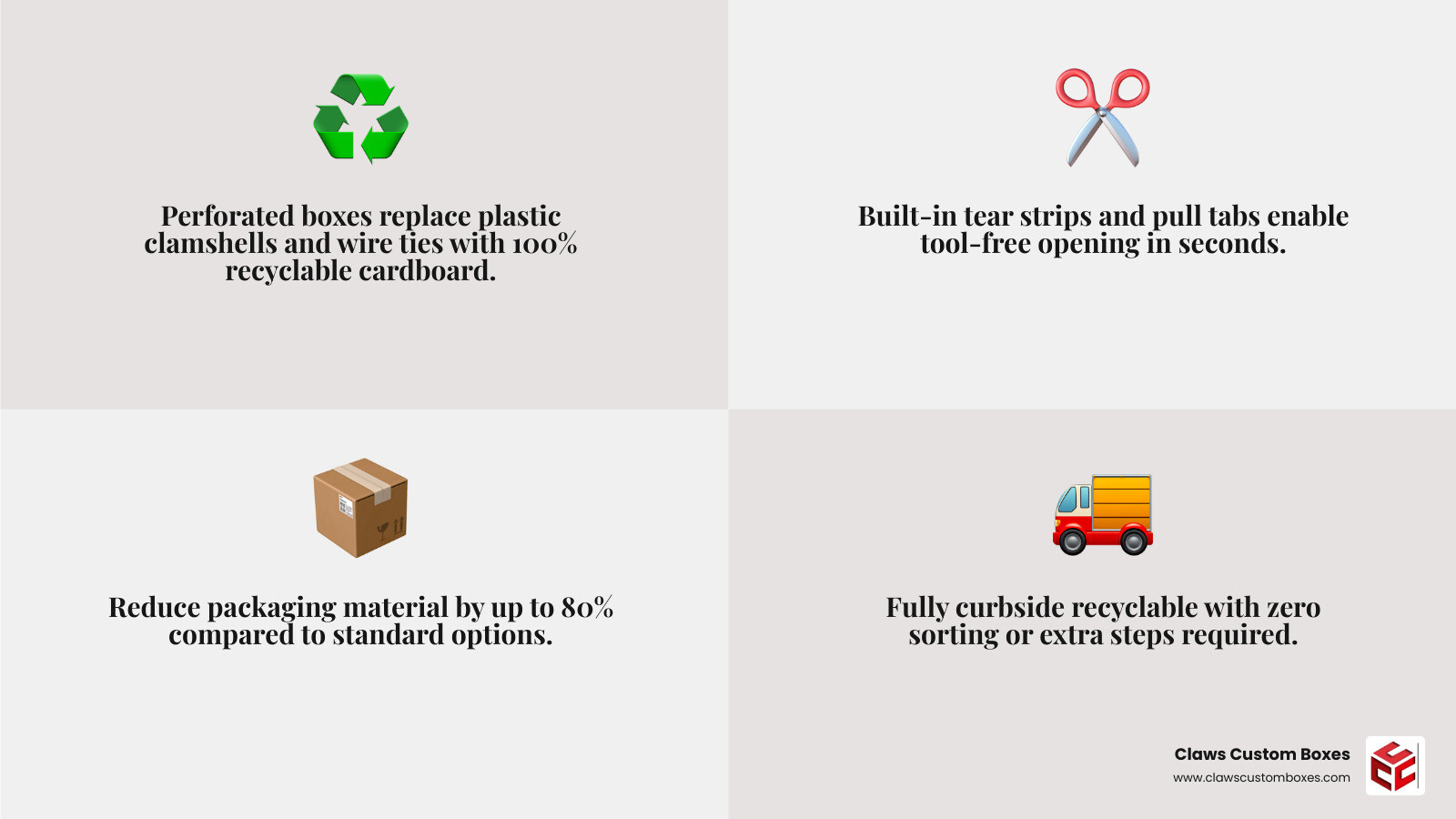
- Replace hard plastic clamshells and wire ties with 100% recyclable cardboard
- Use built-in tear strips and pull tabs so customers open packages without tools
- Reduce packaging material by up to 80% compared to standard packaging
- Ship and recycle through curbside programs with zero extra steps
- Support Amazon’s Frustration-Free Packaging (FFP) certification standards
Think about the last time you wrestled with a plastic clamshell or hunted for scissors to open a package. That experience even has a name — wrap rage. It’s frustrating for customers, wasteful for the planet, and bad for your brand.
By 2026, packaging expectations have shifted fast. Consumers want easy, clean, and green. The U.S. still tosses over 82.2 million tons of packaging waste every year. Shoppers notice — and they remember which brands made them feel good at the moment of unboxing.
Perforated boxes solve both problems at once. They open easily, use less material, and skip the plastic entirely.
My name is Max Anderson, and as a packaging strategist and backlink builder, I’ve spent years studying how sustainable packaging formats like frustration-free and plastic-free perforated boxes drive real business results for small and mid-sized brands. In this guide, I’ll walk you through everything you need to know to make the switch confidently.
Defining Frustration-Free and Plastic-Free: The Eco-Friendly Appeal of Perforated Boxes
When we talk about Frustration-Free and Plastic-Free: The Eco-Friendly Appeal of Perforated Boxes, we are looking at a design philosophy that prioritizes the human being at the end of the supply chain. Originally popularized by Amazon’s 2008 initiative, Frustration-Free Packaging (FFP) is all about removing the “boxing match” between the consumer and the product.
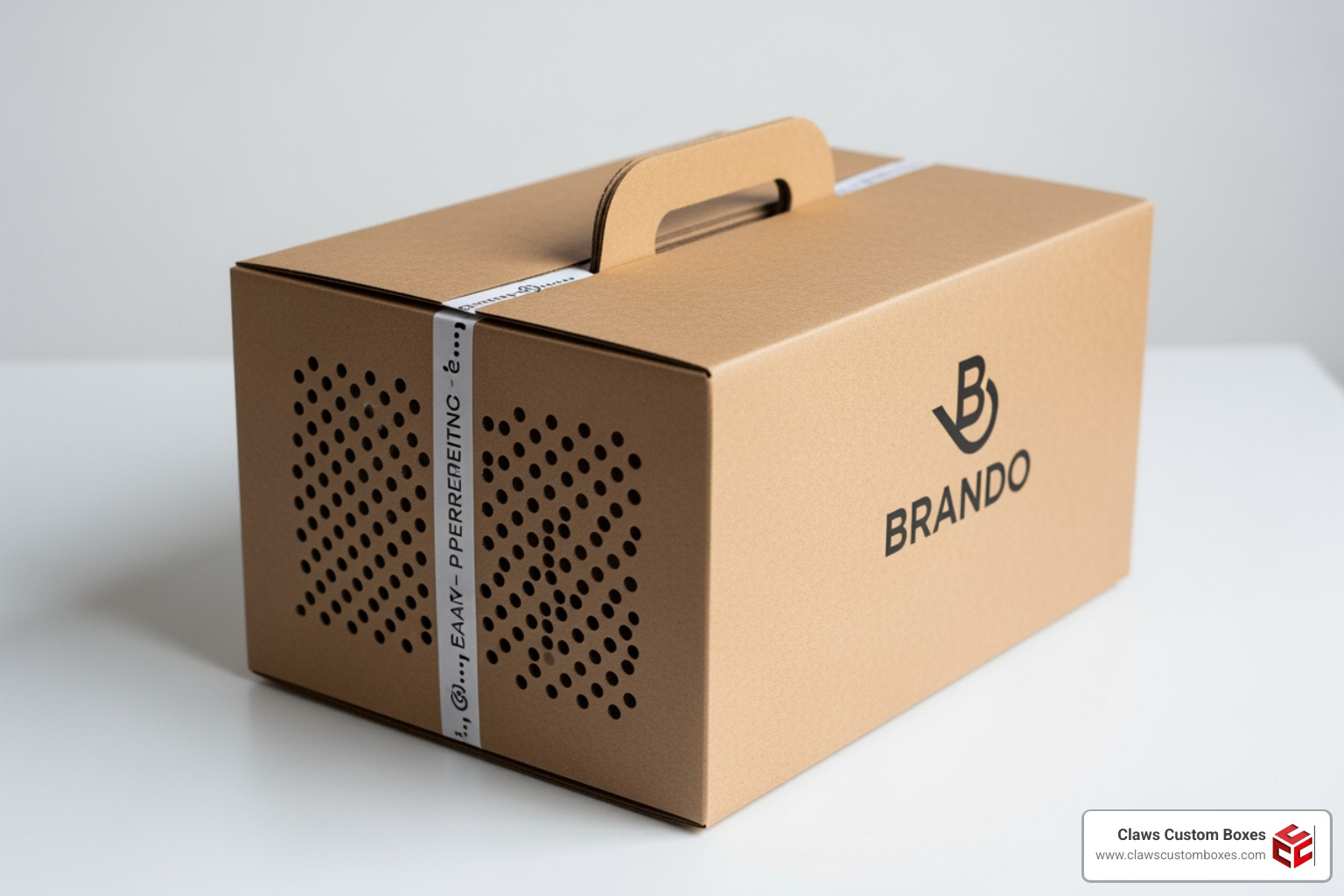
Standard packaging often involves layers of plastic film, tape, and those dreaded wire ties. In contrast, Perforated Boxes utilize a series of small, precisely cut holes or slits that allow the consumer to open the package in seconds. This minimalist approach is inherently sustainable. By focusing on What is Frustration-Free Packaging and Why It Matters?, we see a shift toward 100% curbside recyclable materials. There is no need to separate plastic windows from paperboard; the entire unit can be tossed into the recycling bin, significantly aiding waste reduction.
The Mechanics of Easy-Open Perforations
The magic of Custom Perforated Boxes lies in the engineering. We don’t just poke holes in cardboard; we use high-precision die-cutting to create tear strips and pull tabs that maintain structural integrity during shipping but yield perfectly when pulled by a human hand.
Whether we are using E-flute for smaller retail items or B-flute corrugated board for heavier shipments, the perforations are designed to be tool-free. This means no box cutters or scissors are required. Modern manufacturing techniques like rotary die-cutting allow us to produce these boxes at high speeds—up to 500 meters per minute—ensuring that even high-volume e-commerce brands can maintain efficiency while adopting user-friendly designs.
Eliminating Plastic through Smart Design
One of the most significant wins for the environment is how perforated designs allow us to ditch plastic entirely. Traditionally, toys or electronics were held in place with plastic “blisters” or wire ties. Today, we use paper-based alternatives like internal cardboard folds and Custom cardboard boxes and their effectiveness in replacing harmful packaging materials.
Why kraft boxes are so popular among brands often comes down to their natural strength and biodegradability. By using integrated handles and fiber-based cushioning, we can create a fully protective environment for the product without a single gram of polyethylene. This “tape-free” sealing method not only looks cleaner but also reduces the carbon footprint associated with plastic production.
Key Environmental and Operational Benefits for Modern Brands
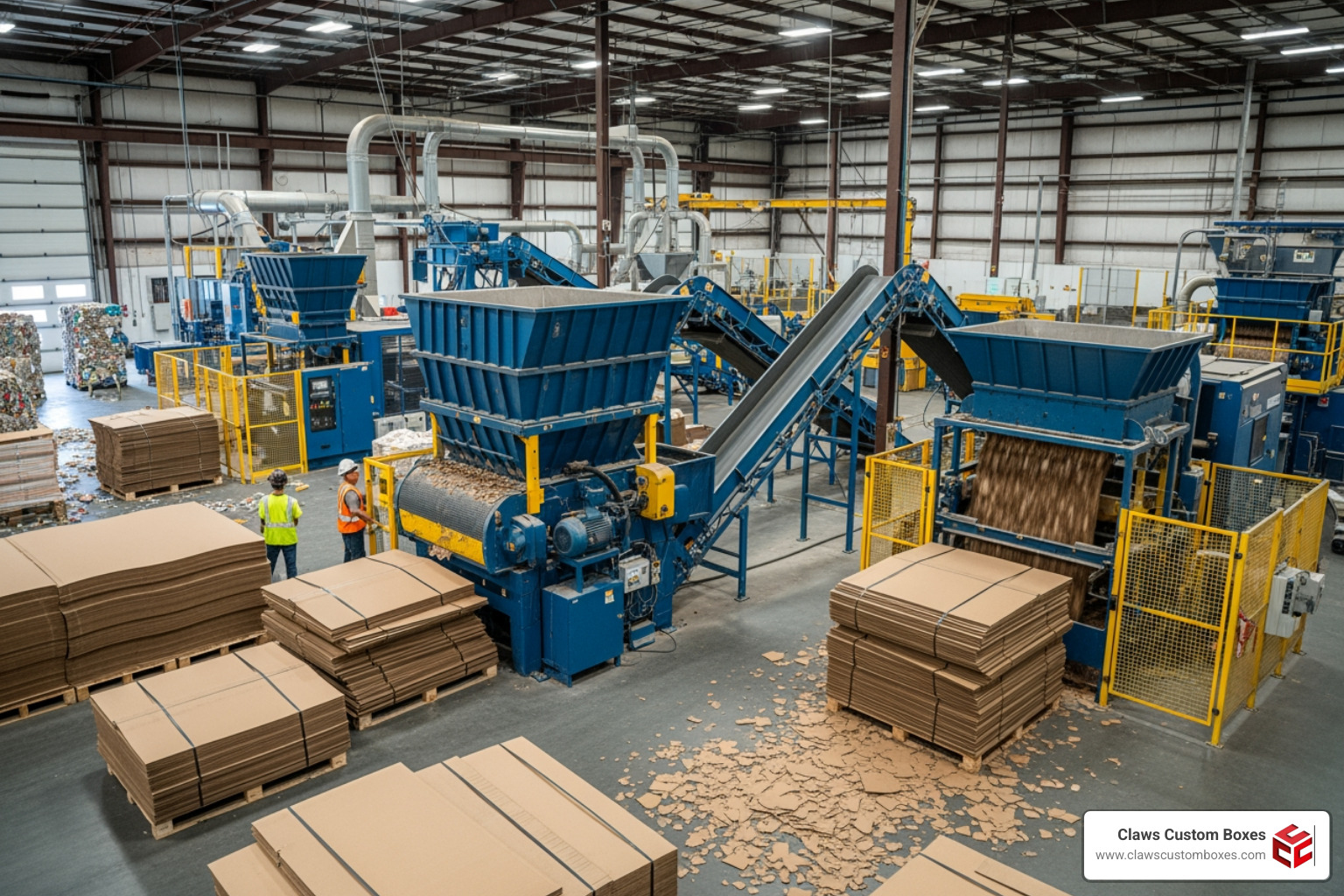
Switching to Frustration-Free and Plastic-Free: The Eco-Friendly Appeal of Perforated Boxes isn’t just a “feel-good” move; it’s a savvy business strategy. When brands optimize their packaging, they often see a massive reduction in material volume. For instance, a famous toy company reduced its packaging components from 24 to just 4 using FFP principles—an 83% reduction in materials.
This efficiency leads to several Top 5 benefits of green packaging to the environment, including lower carbon emissions during transport because the boxes are lighter and take up less space. In our current climate, understanding Why is there a need for eco-friendly boxes in this modern era? is crucial for any brand wanting to stay relevant to the 82% of consumers who now prefer sustainable options.
Enhancing Product Freshness and Shelf Life
Perforations aren’t just for opening; they are also for breathing. In the food industry, micro-perforations (holes as small as 0.1mm) are essential for moisture control. If you’ve ever bought strawberries in a sealed plastic bag, you know they mold quickly. However, in a perforated box, airflow is regulated, allowing ethylene gases to escape and preventing condensation.
Using What is a corrugated box? with strategic ventilation can extend the shelf life of produce by 3 to 5 days. This is one of the most practical What are the uses of eco-friendly packaging boxes?, proving that “green” design can actually save businesses money by reducing product spoilage.
Maximizing Consumer Satisfaction with Frustration-Free and Plastic-Free Perforated Boxes
The unboxing experience has become a cultural phenomenon, with over 25 billion views on YouTube dedicated to the ritual of opening new products. If a customer has to struggle with a package, that “mini adventure” turns into a negative review.
The Importance of using custom eco-friendly boxes and their beneficiary impacts on a brand cannot be overstated. When a customer zips open a perforated strip and finds their product safely nestled in 100% recyclable material, they feel a sense of relief and alignment with the brand’s values. This market differentiation builds long-term loyalty that standard, plastic-heavy packaging simply cannot match.
Implementation Strategies and Industry Applications
| Feature | Standard Packaging | Frustration-Free Perforated Boxes |
|---|---|---|
| Opening Method | Scissors/Knives required | Tool-free tear strips/tabs |
| Material Waste | High (plastic, ties, filler) | Minimal (right-sized cardboard) |
| Recyclability | Difficult (mixed materials) | 100% Curbside recyclable |
| Unboxing Time | Often > 5 minutes | Under 2 minutes |
| Environmental Impact | High carbon footprint | Low carbon footprint |
Transitioning to these designs requires a bit of planning. For e-commerce and electronics, the packaging must pass rigorous ISTA testing to ensure the product survives the “last mile” of delivery without extra Amazon boxing. Understanding Frustration-free packaging: What it means for your brand – Vistaprint helps sellers realize that the box itself becomes the shipping container, saving on dimensional weight fees. Explore our Category: Eco-Friendly Packaging to see how various industries are making this shift.
Why Retailers are Choosing Frustration-Free and Plastic-Free Perforated Boxes in 2026
Operational efficiency is the hidden hero here. Because these boxes are “right-sized,” they take up less room in warehouses and delivery trucks. Businesses using Kraft Packaging find that they spend less on shipping “air” and more on delivering value.
Furthermore, when you Go green and opt for eco-friendly packaging, you reduce the labor costs associated with packing. A simple, one-piece perforated design is much faster to assemble and pack than a multi-component box with plastic inserts and tape.
Overcoming Transition Challenges
The biggest hurdle is often the fear that a “simpler” box won’t protect the product. This is where the debate of Cardboard vs. Corrugated Boxes: What’s the Difference? comes into play. For shipping, we always recommend corrugated board because its fluted layer acts as a shock absorber.
While the initial design phase for Why custom printed kraft boxes are the future of sustainable branding might involve more prototyping, the long-term cost-benefit analysis usually tilts in favor of perforated boxes. You save on material, labor, and shipping, all while boosting your brand’s eco-reputation.
Frequently Asked Questions about Perforated Packaging
Can perforated boxes protect fragile items during shipping?
Yes, absolutely. By using high-quality corrugated cardboard and custom-engineered internal supports, perforated boxes can be incredibly strong. Many of our designs are built to pass the FRUSTRATION-FREE PACKAGING? WHAT AMAZON’S … – EPE USA standards, which include drop, vibration, and compression tests. The key is “right-sizing”—ensuring the product doesn’t move around inside the box.
How do perforated boxes enable a 100% plastic-free experience?
We replace plastic handles with integrated die-cut handles and use paper-based tape or interlocking tabs for sealing. Instead of bubble wrap, we use honeycomb paper or molded pulp inserts. You can see more examples in our Category: Kraft Packaging section, where every element is designed to be biodegradable.
Are perforated boxes more cost-effective than standard packaging?
While the specialized die-cutting might have a slightly higher upfront cost, the total cost of ownership is usually lower. You save money through reduced material usage, faster packing times, and lower shipping costs due to smaller package dimensions. As noted in the Frustration Free vs. Standard Packaging: What’s the Difference? comparison, FFP can lead to significant long-term savings.
Conclusion
At Claws Custom Boxes, we believe that the future of packaging is one where the Earth doesn’t have to pay for our convenience. By embracing Frustration-Free and Plastic-Free: The Eco-Friendly Appeal of Perforated Boxes, your brand can stand at the forefront of the 2026 sustainability movement.
Whether you are based in Farmington, MI, or anywhere else in the USA, we are here to help you design packaging that delights your customers and protects our planet. From tailored designs to free shipping and 24/7 support, we make the transition to green packaging as easy as tearing a perforated strip.
Ready to upgrade your brand advocacy and reduce your footprint? Explore our eco-friendly packaging solutions today and let’s build a sustainable future together.
 ✦ Written byThe Claws Custom Boxes packaging teamStructural designers and print specialists helping brands get boxes right the first time.
Ask an expert
✦ Written byThe Claws Custom Boxes packaging teamStructural designers and print specialists helping brands get boxes right the first time.
Ask an expert