Why Fulfillment Centers Break Packaging — and How RTE Design Fights Back
Designing reverse tuck packaging to survive US fulfillment center handling is one of the most underestimated challenges small and mid-size brands face when scaling their operations.
Here’s a quick breakdown of what it takes:
| Design Factor | What to Get Right |
|---|---|
| Material | 18–24pt SBS or kraft; E-flute for heavier items |
| Closure | Opposing tuck flaps with slit locks to prevent pop-open |
| Grain direction | Parallel to vertical scores for max stacking strength |
| Burst strength | Minimum 60-lb for mil-spec or heavy-duty fulfillment |
| Dust flap clearance | 1/32 to 1/16 inch gap to prevent gaping |
| Dieline tolerance | Under 0.005 inches for repeatable, square assembly |
| Compliance | PFAS-free coatings (California A.B. 1200, 100 ppm threshold) |
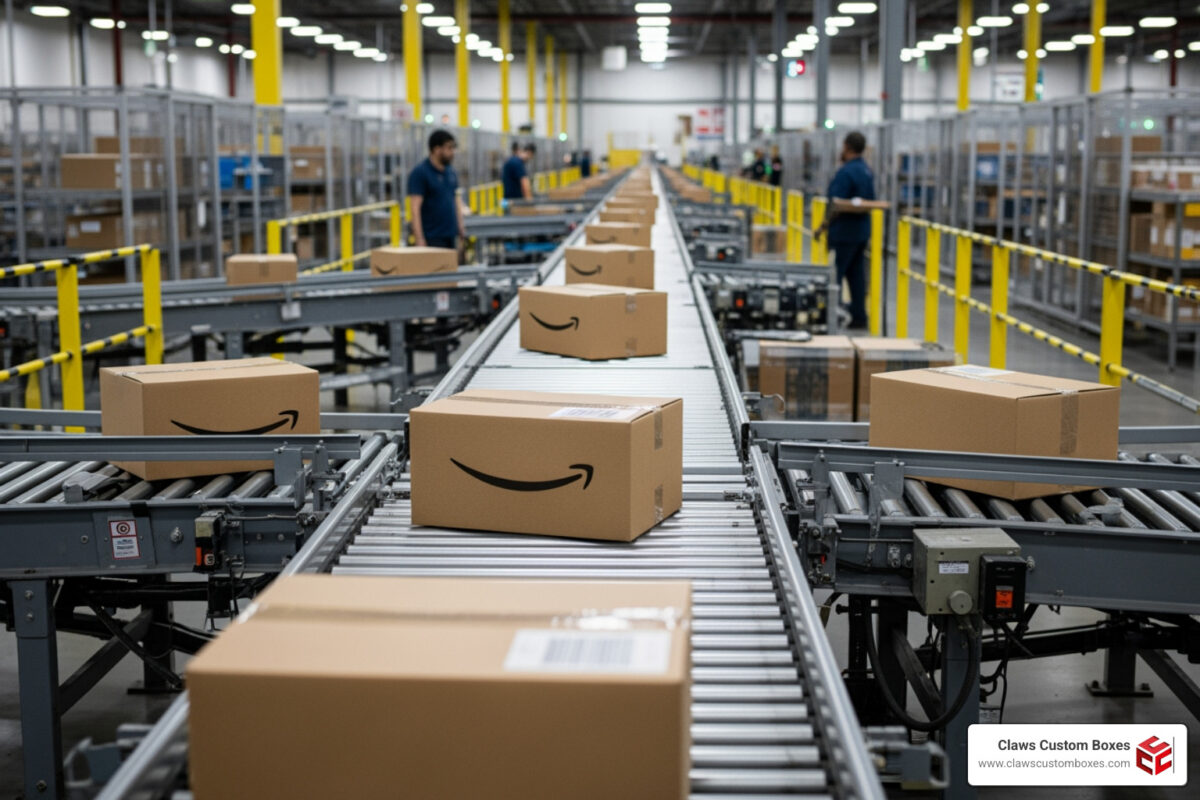
Your box goes through a lot before it reaches a customer. Conveyor belts. Sorting machines. Pallet stacking. Drop impacts. Most RTE cartons that fail in fulfillment centers don’t fail because of bad luck — they fail because of avoidable design decisions made early in the process.
The good news? Reverse tuck end (RTE) cartons are actually well-suited for high-volume fulfillment when they’re engineered correctly. They’re fast to assemble, cost-efficient to produce, and compatible with both manual and automated packing lines. The problem is most brands treat them as a commodity instead of an engineering decision.
This guide walks you through exactly how to design an RTE carton that holds up — from material specs to closure geometry to testing protocols.
I’m Max Anderson, and I’ve spent years helping brands build smarter backlink and content strategies around packaging topics, including designing reverse tuck packaging to survive US fulfillment center handling — giving me a clear picture of what the industry gets right and where most brands go wrong. Let’s get into it.
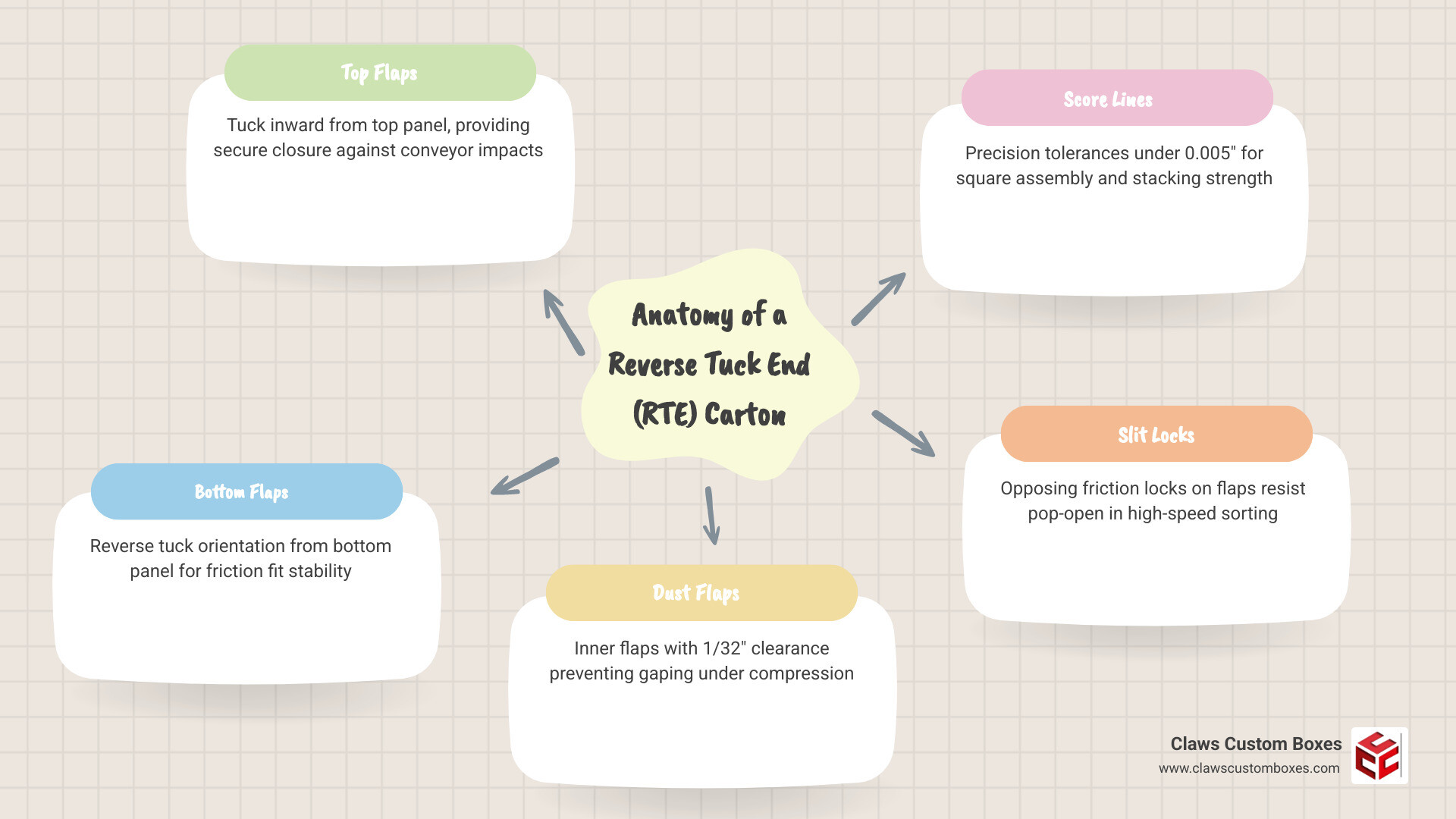
Common ** Designing Reverse Tuck Packaging to Survive US fulfillment Center Handling** vocab:
- Structural Innovations in Custom Die-Cut Packaging
- Structural Secrets: Designing Sturdy, High-Impact Retail Display Boxes
- Ultimate Checklist for Custom Packaging Boxes
Understanding the RTE Structure for High-Volume Logistics
When we talk about a Reverse Tuck End (RTE) carton, we are looking at the “workhorse” of the folding carton world. Unlike its cousin, the Straight Tuck End (STE) box, the RTE features flaps that tuck in opposite directions. Typically, the top flap tucks from the front to the rear, while the bottom flap tucks from the rear to the front.
This might seem like a minor detail, but in high-volume logistics, it’s a game-changer. Because the flaps are on opposite sides of the dieline, we can “nest” these boxes more efficiently on a single sheet of paperboard. This nesting efficiency can reduce material waste by 15% to 20%, which translates to lower costs for you and a smaller environmental footprint for our Michigan-based partners.
For brands in Farmington, MI, and across the USA, choosing Reverse Tuck Boxes is often the default for pharmaceuticals, cosmetics, and lightweight electronics. The Custom Boxes Style Reverse Tuck Style is popular because it arrives flat, takes up minimal warehouse space, and can be snapped into shape in a heartbeat.
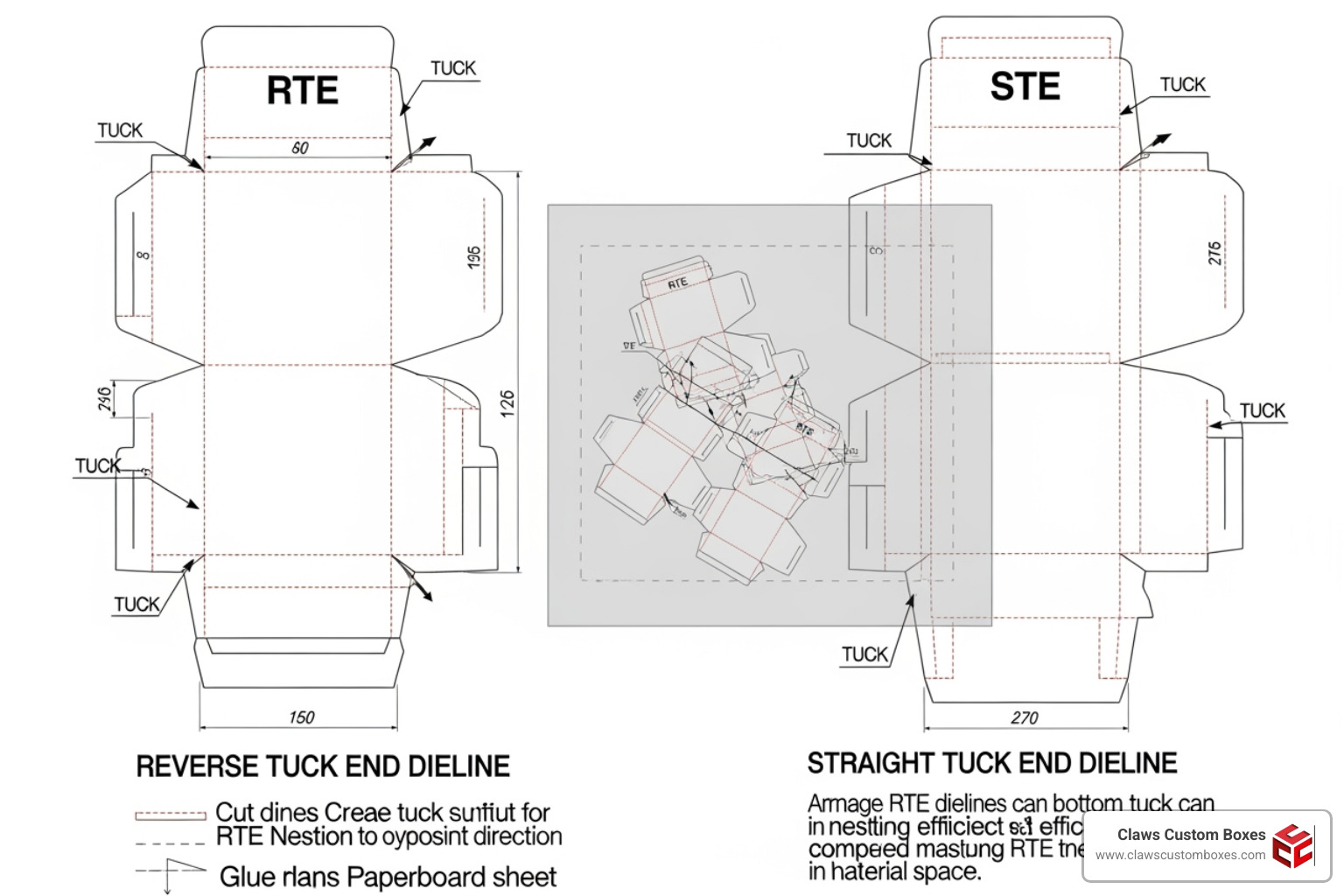
Designing Reverse Tuck Packaging to Survive US fulfillment Center Handling via Structural Integrity
The secret to designing reverse tuck packaging to survive US fulfillment center handling lies in the “friction fit.” In a fulfillment center, your package isn’t just sitting on a shelf; it’s being whipped around on a conveyor belt at high speeds. If the friction fit isn’t tight enough, those flaps can vibrate open.
We engineer our Custom Reverse Tuck End Boxes to have equal resistance on both ends. This balance keeps the box “square” even when it’s under pressure. If a box loses its squareness (a phenomenon called parallelogramming), it can snag on automated sorting arms or fail to stack properly on a pallet. By ensuring the top and bottom tucks provide opposing tension, we create a more stable vertical column.
RTE vs. Straight Tuck End (STE) and Auto-Lock Bottoms
Choosing the right style is often a matter of “choosing your failure mode.” While RTE is king for cost and speed, it isn’t always the right choice for every product.
| Feature | Reverse Tuck (RTE) | Straight Tuck (STE) | Auto-Lock Bottom |
|---|---|---|---|
| Assembly Speed | Very Fast | Fast | Instant (Pre-glued) |
| Material Yield | High (Cost-effective) | Moderate | Lower |
| Stacking Strength | Good (for light items) | Better (Stiffer column) | Excellent |
| Bottom Security | Friction/Slit Lock | Friction/Slit Lock | Heavy-duty Glued |
| Best For | Lightweight FMCG | Cosmetics/Electronics | Heavy Jars/Glass |
If you are shipping a heavy glass jar of Michigan maple syrup, an RTE might not be enough. A heavy product creates a “point load” on the bottom flap. In that case, we might recommend an auto-lock bottom, which uses pre-glued flaps to ensure the product doesn’t “pretend” to be secure and then fall through the bottom. However, for 90% of lightweight retail items, Custom Printed Tuck Boxes offer the perfect balance of protection and price.
Material Selection: Paperboard Specs for Fulfillment Survival
You wouldn’t wear a paper shirt to a wrestling match, so don’t send a flimsy box into a US fulfillment center. The material you choose is the foundation of designing reverse tuck packaging to survive US fulfillment center handling.
For most folding cartons, we use Solid Bleached Sulfate (SBS). It’s made from virgin wood pulp and offers a clean, white surface that makes your branding pop. For a more rugged, eco-friendly look, Kraft paperboard is an excellent alternative. However, when the product gets a bit heavier or needs to survive a longer DTC (Direct-to-Consumer) journey, we often step up to E-flute Corrugated Boxes. E-flute is only 1/16th of an inch thick, but it provides significantly more crush resistance than standard cardstock.
When selecting Custom Packaging Solutions, we look at the “caliper,” which is just a fancy word for thickness. Standard retail boxes usually range from 16pt to 24pt. If your box is going through the Amazon FBA gauntlet, we generally recommend staying on the higher end of that spectrum.
Optimizing Burst Strength and Bending Chip for Mil-Spec Compliance
If you’re working with the Department of Defense (DoD) or just want “tank-like” durability, you need to look at mil-spec requirements. This usually involves a 60-pound bursting strength and a 0.024 bending chip. Burst strength measures how much pressure the walls of the box can take before they pop, while the bending chip ensures the board can fold 180 degrees without the fibers cracking.
Even if you aren’t shipping military gear, these standards are a great benchmark for Durable Reverse Tuck Packaging. A box that meets these specs is much more likely to survive being at the bottom of a four-foot-high stack of packages in a delivery van.
Designing Reverse Tuck Packaging to Survive US fulfillment Center Handling with Sustainable Substrates
In May 2026, sustainability isn’t just a “nice to have”—it’s a legal requirement in many places. For example, California’s A.B. 1200 has set a 100 ppm threshold for regulated PFAS in food packaging. This means the coatings we use to make boxes moisture-resistant must be PFAS-free.
We prioritize Eco-Friendly Custom Packaging by using aqueous (water-based) coatings and soy-based inks. These materials ensure your packaging is 100% recyclable and biodegradable while still providing that “wow” factor with matte or gloss finishes.
Engineering Secure Closures and Advanced Geometry
The geometry of your box is where the real “magic” happens. A box is just a piece of paper until you engineer the folds. When designing reverse tuck packaging to survive US fulfillment center handling, the closure is the most common point of failure.
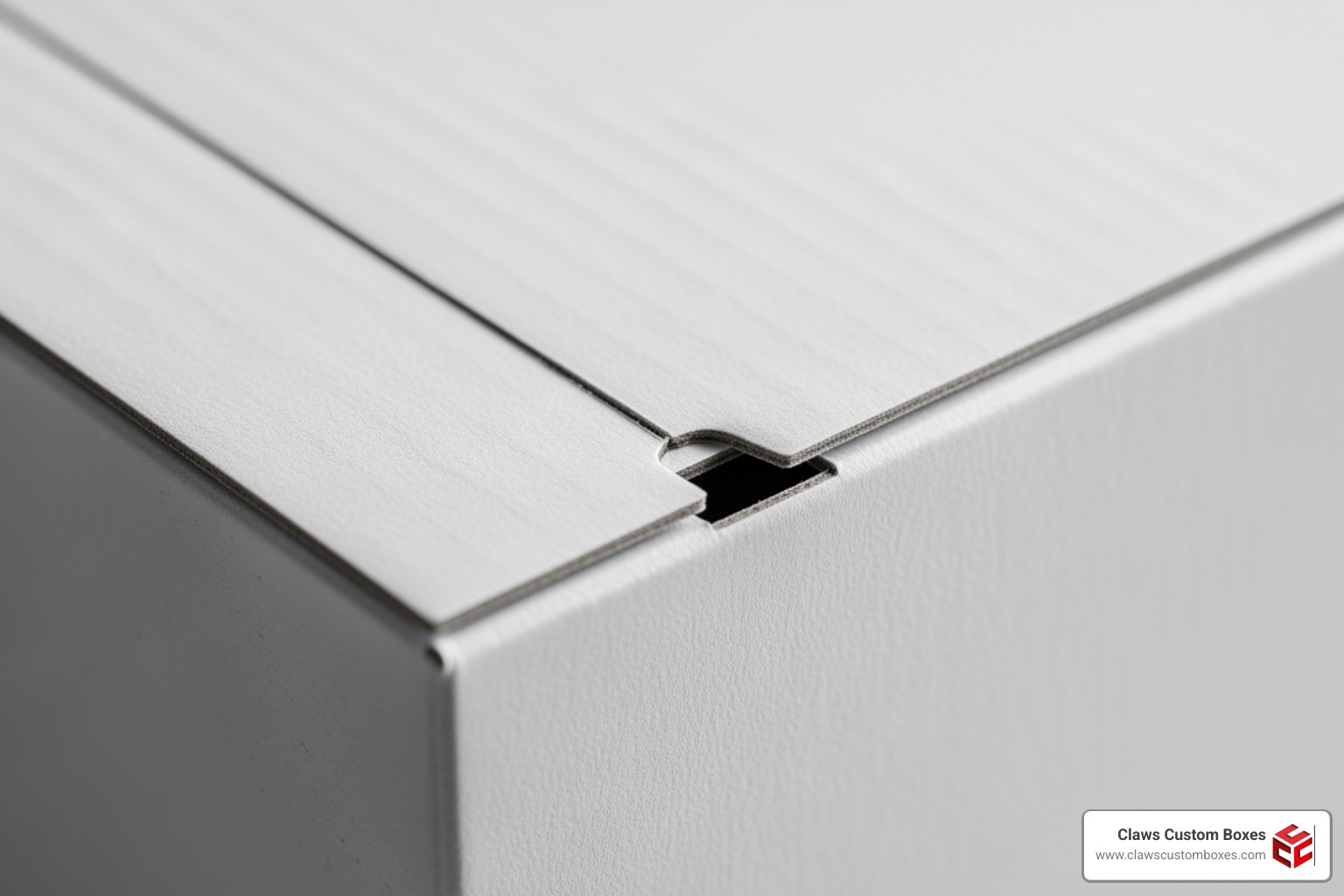
We use slit locks (small notches on the side flaps) to catch the tuck flap and keep it from sliding out. Without these, a simple vibration on a conveyor belt could cause your box to gape open, exposing your product to dust or theft. We also pay close attention to score line tolerances. If our die-cutting is off by even 0.005 inches, the box won’t close square, which is a big no-no for Custom Shipping Boxes.
Advanced Geometry in Designing Reverse Tuck Packaging to Survive US fulfillment Center Handling
One of the most technical aspects we handle is grain direction. Think of paperboard like wood; it has a grain. If the grain is parallel to the vertical score lines, the box has up to 30% more stacking strength. If the grain is going the wrong way, the box will bulge and eventually collapse under the weight of other packages.
For brands using automated fulfillment, we also incorporate 15-degree lead-in angles on the dust flaps. This helps the vacuum arms on packaging machines “grab” and fold the flaps without snagging. It might sound like overkill, but when you’re packing 80,000 units, a 0.7-second delay per unit from a snagged flap can cost thousands in payroll. That’s why our Structural Design Services focus on these tiny details.
Preventing Gaping and Popping Under Compression
“Gaping” is that annoying little space that appears between the flap and the box body. It lets in dust and makes the packaging look cheap. To prevent this, we calculate a dust flap clearance of exactly 1/32 to 1/16 of an inch. This ensures the flaps sit flush without “crowning” (bowing outward).
We also consider the coefficient of friction. If a box is too “slippery” (common with some high-gloss UV coatings), it can slide off a pallet. If it’s too “sticky,” it won’t slide through the sorting chutes. We often recommend matte UV finishes or specialized aqueous coatings for Postage Boxes to strike that perfect balance.
Testing Protocols to Validate Fulfillment Durability
You wouldn’t launch a rocket without testing it, and you shouldn’t launch a new packaging design without a “crash test.” When designing reverse tuck packaging to survive US fulfillment center handling, we use ISTA (International Safe Transit Association) standards to validate our designs.
The most common test is the drop test. We drop the loaded box from various heights (usually 30 inches) onto its corners, edges, and faces. If the tuck flaps pop open or the corners crush significantly, we go back to the drawing board. We also use vibration tables to simulate the “jiggling” a box experiences during a cross-country truck ride. This is where Quality Assured Reverse Tuck Boxes and Black Mailing Boxes prove their worth.
Simulating Amazon FBA and DTC Stressors
Amazon FBA centers are high-stress environments. Packages are stacked high, moved fast, and often dropped into large sorting bins. To survive this, we look at the Edge Crush Test (ECT) for corrugated options and side-wall compression for folding cartons.
If you are shipping Direct-to-Consumer (DTC), your RTE box is often placed inside a Mailer Boxes. In this “box-in-a-box” scenario, the RTE carton’s job is to prevent the product from moving around, while the mailer takes the brunt of the external impact.
Frequently Asked Questions about Reverse Tuck Packaging
What is the maximum product weight for a standard RTE box?
For a standard 18pt to 24pt SBS folding carton, we generally recommend a maximum weight of 1 to 2 pounds. If your product is heavier, the bottom flap is at risk of “bowing” or popping open. For anything over 2 pounds, we suggest switching to an E-flute corrugated RTE or an auto-lock bottom style.
How does grain direction affect the survival of folding cartons?
Grain direction is the “spine” of your box. When the grain runs vertically (parallel to the height of the box), it acts like a series of tiny pillars. This provides the vertical compression strength needed for stacking. If the grain runs horizontally, the box is much more likely to “bulge” and collapse under pressure.
Can RTE boxes be used for liquid or fragile glass products?
Yes, but they usually need help. For liquids or glass, we recommend adding custom inserts or “corrugated sleeves” inside the RTE box. This provides a buffer zone that prevents the glass from touching the outer walls of the box. For high-end glass products, a Custom Printed Tuck Box with a custom foam or cardboard insert is the industry standard.
Conclusion
At Claws Custom Boxes, we believe that great packaging is where engineering meets art. Designing reverse tuck packaging to survive US fulfillment center handling doesn’t have to be a headache if you have the right partner. Whether you’re a small startup in Michigan or a national brand, we offer tailored designs, 24/7 support, and free shipping to ensure your products arrive in perfect condition.
By focusing on high-quality materials, precise dieline geometry, and sustainable practices, we help you reduce returns and build brand loyalty. Ready to upgrade your fulfillment game? Explore our Custom Boxes Wholesale options today and let’s build something that can survive the gauntlet. Reach out to us for ordering advice or request a custom quote today — we’re here to help you tuck, lock, and ship with confidence!
 ✦ Written byThe Claws Custom Boxes packaging teamStructural designers and print specialists helping brands get boxes right the first time.
Ask an expert
✦ Written byThe Claws Custom Boxes packaging teamStructural designers and print specialists helping brands get boxes right the first time.
Ask an expert