Why Structural Secrets Matter for Designing Sturdy, High-Impact Retail Display Boxes
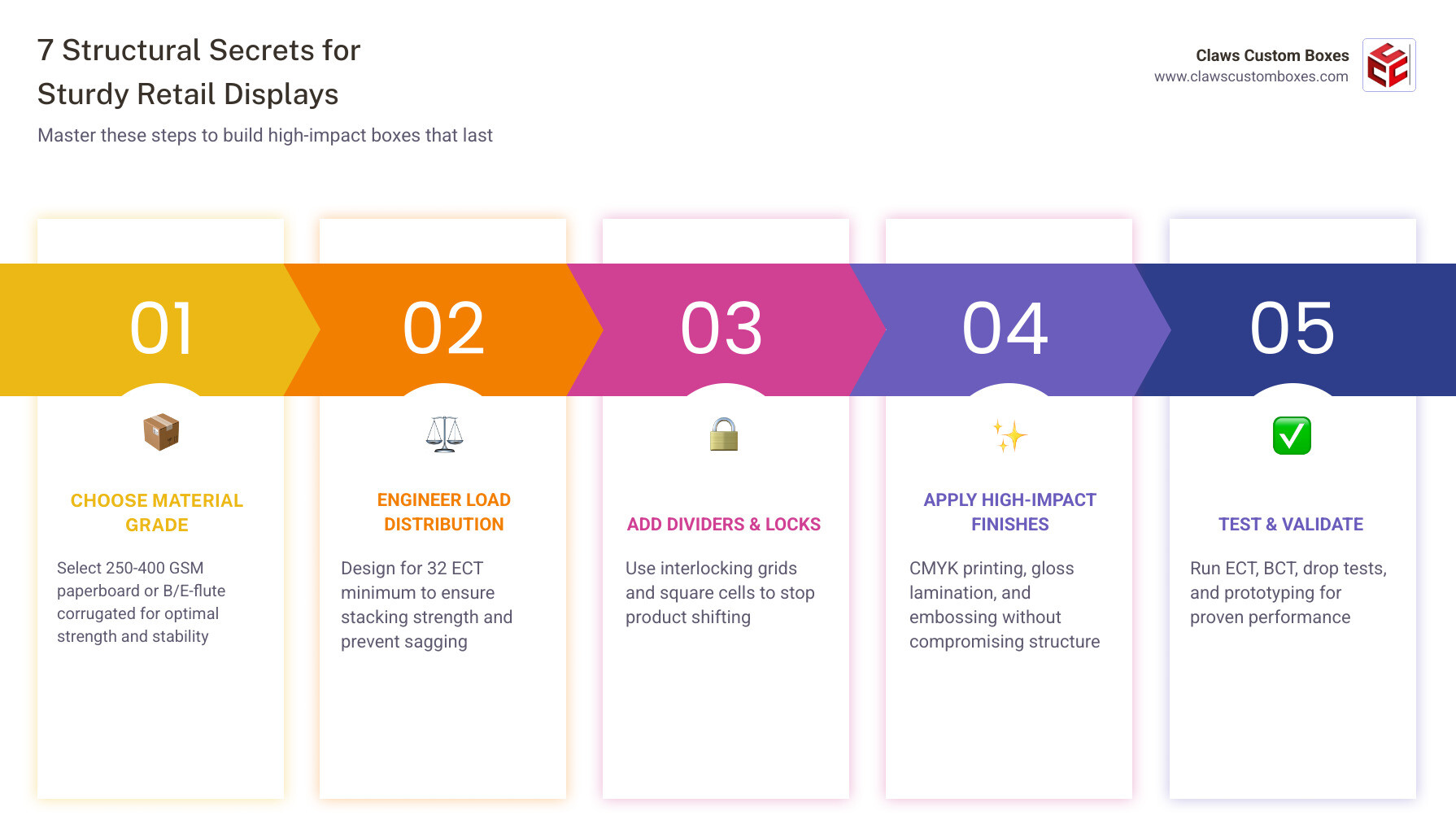
The Structural Secrets: Designing Sturdy, High-Impact Retail Display Boxes come down to seven core steps:
- Choose the right material grade and flute type (corrugated board or paperboard GSM)
- Engineer for load distribution and stacking strength (32 ECT minimum for most retail loads)
- Add dividers and interlocking mechanisms to stop products from shifting
- Apply high-impact printing and finishes (lamination, foil, embossing) without weakening structure
- Design for retailer compliance and easy assembly (flat-pack shipping, tool-free setup)
- Validate with prototyping and testing (ECT, BCT, drop tests)
- Balance sustainability with production efficiency (recycled materials, smart MOQ planning)
Picture this: your display looks perfect on day one. By day three, items are sliding, lanes have stretched out, and facings have collapsed. It’s a common story — and it almost always traces back to structural decisions made (or skipped) early in the design process.
A retail display box does more than hold product. It’s a silent salesperson. It protects during shipping, survives restocking, and keeps shoppers engaged in the few seconds they spend deciding what to buy. Getting the structure right isn’t optional — it’s the foundation everything else builds on.
In 2026, with shelf space tighter and retail competition fiercer than ever, a display that sags, leans, or loses its shape mid-promotion doesn’t just hurt sales — it damages brand trust.
I’m Max Anderson, a packaging strategist with years of hands-on experience helping brands crack the Structural Secrets: Designing Sturdy, High-Impact Retail Display Boxes — from material selection to retailer compliance. In this guide, I’ll walk you through exactly how to build display boxes that hold up and stand out.
Simple Structural Secrets: Designing Sturdy, High-Impact Retail Display Boxes word guide:
- Foil Stamping vs. Spot UV: Choosing the Right Accents for Your Packaging
- Ultimate Checklist for Custom Packaging Boxes
- Why Small Businesses Need Custom Packaging to Compete in 2026
Structural Secrets: Designing Sturdy, High-Impact Retail Display Boxes
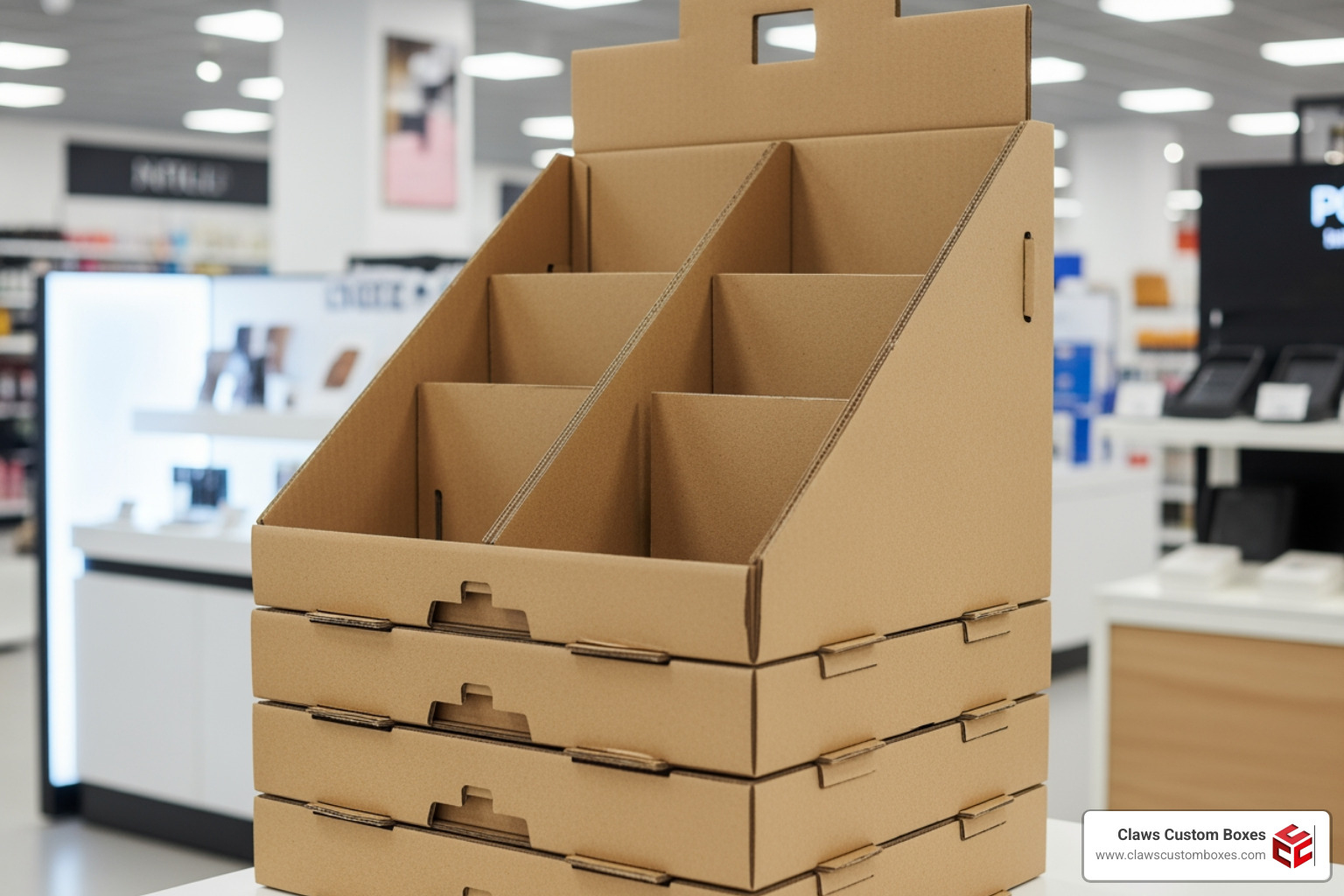
When we talk about structural secrets, we aren’t just talking about using thicker cardboard. True structural integrity is about the “load path”—how weight travels from the top of the display to the floor. According to Structural Concepts: Delivering Fresh. Always. , maintaining a consistent environment for the product is key, and in retail, that “environment” includes a stable, non-sagging shelf.
The core components of a sturdy display include the tray, the back-panel (or header), and the internal support system. One of the most overlooked secrets is “divider pitch.” If your dividers aren’t spaced precisely to the product’s footprint, the items will lean, putting uneven pressure on the sidewalls. This causes the dreaded “splay,” where the box walls bow outward, making the display look messy and weak.
Material Selection: The Structural Secrets: Designing Sturdy, High-Impact Retail Display Boxes
Choosing the right material is the first hurdle. We generally look at paperboard GSM (Grams per Square Meter) for smaller Display Boxes. Here is a quick breakdown of how we select GSM based on product weight:
- 250–300 GSM: Ideal for light retail products like tea bags or small cosmetics.
- 300–350 GSM: The standard for normal consumer goods.
- 350–400 GSM: Necessary for substantial multi-package presentations.
For larger floor units, we move into corrugated territory. Flute profiles are the “waves” inside the cardboard. B-flute (approx. 1/8″) offers excellent crush resistance and is the workhorse of the industry. E-flute (approx. 1/16″) is thinner, providing a smoother surface for high-end printing, while double-wall corrugated is reserved for heavy-duty items that need to survive weeks of high-traffic interaction.
Step 1: Choosing the Right Material Grade and Flute Type
The foundation of any Structural Secrets: Designing Sturdy, High-Impact Retail Display Boxes strategy is the substrate. If you choose a material that’s too light, the display collapses like a sad soufflé. If it’s too heavy, you’re wasting money on shipping and production.
| Flute Type | Thickness (approx) | Best Use Case |
|---|---|---|
| A-Flute | 1/4 inch | Maximum cushioning for fragile items. |
| B-Flute | 1/8 inch | Retail displays, PDQ boxes, and canned goods. |
| C-Flute | 3/16 inch | Standard shipping boxes; good stacking strength. |
| E-Flute | 1/16 inch | Cosmetic Display Boxes, glass vials, and small electronics. |
| F-Flute | 1/32 inch | Lightweight folding cartons with high-end graphics. |
For many of our clients in the Industries We Serve | Custom Packaging Solutions – Michigan Box , we recommend 200# corrugated construction. This means the board is built to withstand 200 lbs of pressure per square inch. When combined with moisture-resistant coatings, these materials prevent the cardboard from absorbing humidity in the warehouse, which is a leading cause of structural failure.
Step 2: Engineering for Load Distribution and Stacking Strength
A display might look strong when it’s empty, but the real test happens when it’s fully stocked. This is where the 32 ECT (Edge Crush Test) rating comes in. An ECT rating tells us how much pressure the edges of the board can take before buckling. For most retail environments, 32 ECT is the “golden standard” to prevent sagging.
We often look to Retail Displays | SPC Retail for inspiration on how to turn these structural necessities into art. One secret to preventing sagging is “load path design.” By aligning the vertical flutes of the cardboard with the direction of the weight, the display acts like a series of tiny columns.
For products like CBD Display Boxes, where bottles are heavy and glass is fragile, we use reinforced shelving. This involves doubling the thickness of the shelf or adding a “bridge” support underneath to ensure the middle doesn’t dip over time.
Step 3: Implementing Dividers and Interlocking Mechanisms
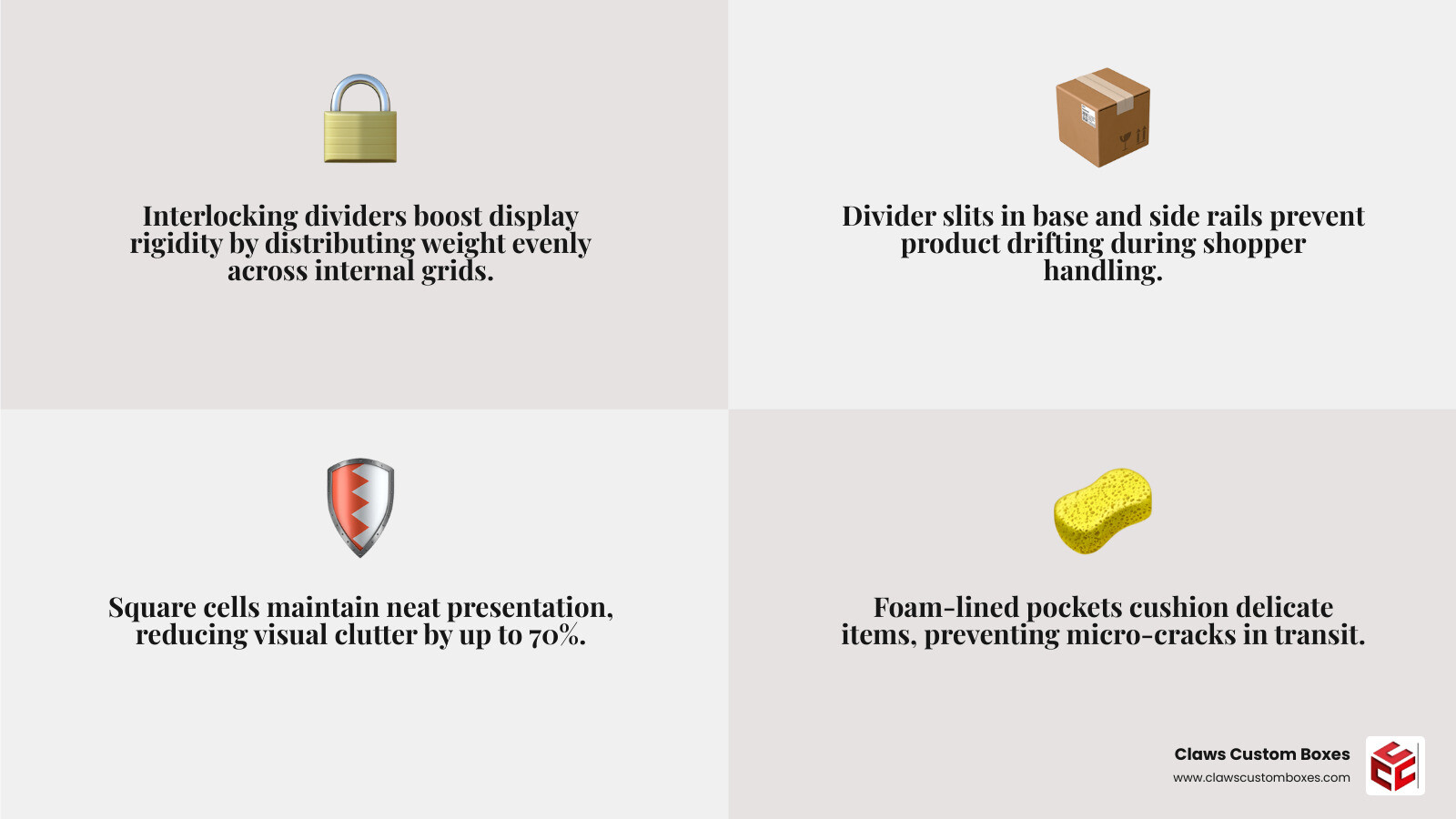
Have you ever seen a display where all the products have fallen into a heap at the bottom? That’s a failure of internal engineering. Interlocking divider grids are essential for maintaining a neat presentation. These grids don’t just keep products organized; they actually add to the box’s overall rigidity.
As noted by Custom Retail Display Boxes | High-Impact In-Store Packaging , these internal structures prevent “drifting.” When shoppers pick up an item, the remaining items tend to shift. Interlocking mechanisms lock the dividers into slits in the base and side rails, keeping the “cells” square even under repetitive handling.
For delicate items like Bath Bomb Display Boxes, we might even incorporate foam-lined pockets or kiss-cut foam cells. This cushions the product and prevents micro-cracks during transit, ensuring that what the customer sees on the shelf is in pristine condition.
Step 4: Enhancing Visibility with High-Impact Printing and Finishes

Now that the box is sturdy, it needs to be “loud.” But here’s the catch: some finishes can actually weaken the paper fibers if not applied correctly. We use high-definition CMYK and Pantone printing to ensure brand colors are exact.
To create a high-impact look, we recommend:
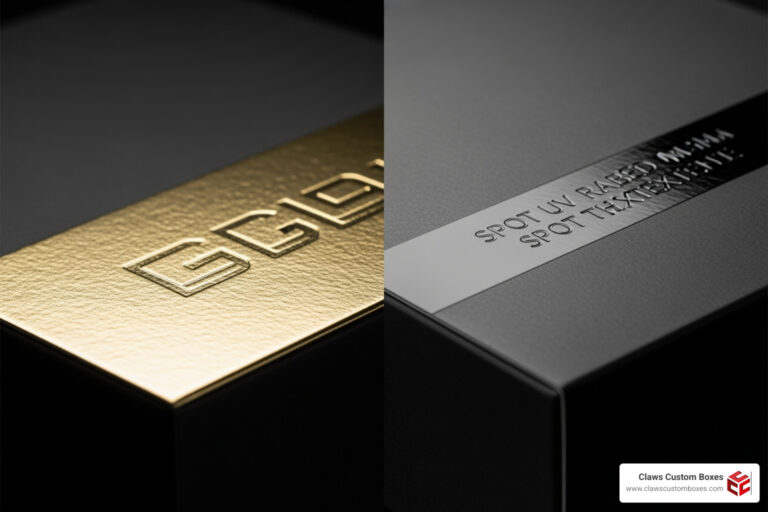
- Gloss Lamination: Adds a scratch-resistant layer that keeps the display looking new for weeks.
- Embossing/Debossing: Adds a tactile feel that encourages shoppers to touch the box.
- Foil Stamping: Perfect for Black Cardboard Display Boxes to create a premium, luxury vibe.
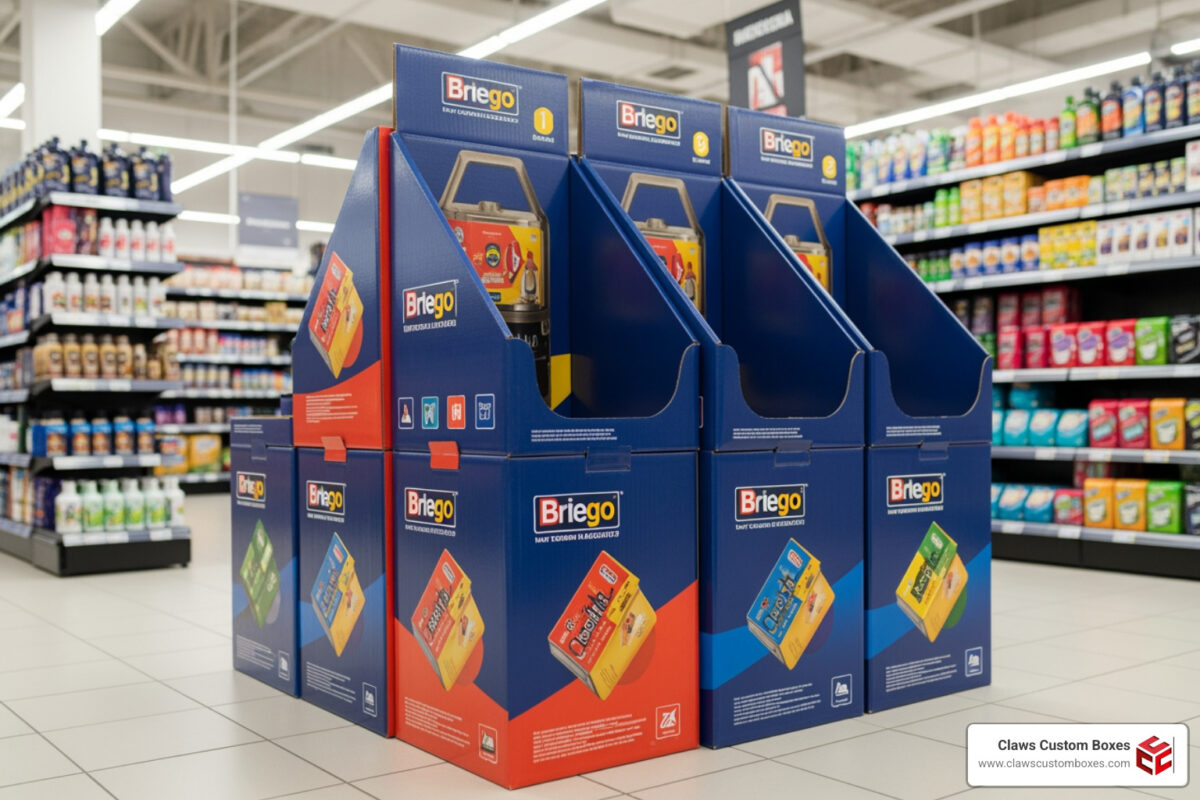
We follow the 5×5 Rule: a shopper should be able to identify the product and its value within 5 seconds from 5 feet away. SPC Retail | Display Solutions to Turn Retail into Art emphasizes that the display should be shoppable from three sides. This is especially important in big-box retailers where floor placement can be unpredictable.
Step 5: Designing for Retailer Compliance and Easy Assembly
If a retailer can’t put your display together in under two minutes, it might never make it to the floor. We design for “tool-free assembly,” using smart scores and perforations that allow the box to pop into place.
Retailer compliance is another massive hurdle. For example, if you’re designing for Costco, you must adhere to specific pallet dimensions and “cross-dock” system requirements. These displays often serve as both the shipping vehicle and the store shelf. They must be able to be wheeled directly from the truck to the floor without any unboxing.
We’ve found that Display Boxes Improving Everything in the retail workflow when they are shipped flat-packed. This reduces shipping costs and minimizes the risk of damage during transit. However, we ensure the “fold recovery” is high—meaning once folded, the cardboard wants to stay in its new shape rather than springing back.
Step 6: Validating Performance through Prototyping and Testing
Never go to mass production without a prototype. We start with “white samples”—unprinted structures—to test the fit and strength. Once the structure is approved, we move to printed samples to check the alignment of the graphics over the scores and folds.
Key tests include:
- BCT (Box Compression Test): Measures how much weight the entire box can support before collapsing.
- Drop Tests: Simulates a box falling off a delivery truck or a retail shelf.
- Vibration Simulation: Ensures that the friction of transit won’t scuff the high-impact graphics.
According to Structural Concepts: Delivering Fresh. Always. , failure mode analysis is vital. We look for “bow” or “splay” in the panels. If a panel leans by even a few degrees, it can cause the whole stack to tip in a high-traffic environment. For more insights, check out What Different Types of Display Boxes Are Best for the Improved Sale.
Prototyping the Structural Secrets: Designing Sturdy, High-Impact Retail Display Boxes
Dieline precision is the secret sauce here. A dieline is the 2D “blueprint” of your box. If the scores are off by even a millimeter, the interlocking tabs won’t fit, and the structure loses its integrity. We also plan for “seasonal tooling.” By designing a standard footprint that works for multiple campaigns, brands can save on the cost of new cutting dies for every promotion. This is a key part of A Guide to Cosmetic Display Boxes for Targeting More Customers.
Step 7: Balancing Sustainability with Production Efficiency
In 2026, sustainability isn’t just a trend; it’s a requirement. Shoppers are increasingly filtering their purchases based on eco-friendliness. We use recycled paperboard and biodegradable, soy-based inks to ensure your display is as green as it is sturdy.
Efficiency is also about the bottom line. Our standard MOQ (Minimum Order Quantity) is 1000 units, which allows us to offer wholesale pricing while maintaining high quality. With a shipping time of 12 to 15 working days, we help brands hit their seasonal launch windows without stress.
Using mono-materials (making the box and the dividers out of the same type of cardboard) makes the display much easier for the retailer to recycle at the end of the campaign. You can see how this applies across different sectors in our Products by Industry Display Boxes section.
Frequently Asked Questions about Retail Display Design
How do I choose the right divider pitch for mixed products?
The best strategy is to start with the largest product’s footprint. Map the smallest unit’s width to create a repeating “ladder” grid. This avoids awkward gaps and ensures that even the narrowest items stay upright and visible.
Can these display boxes support heavy items without leaning?
Absolutely. The secret is using corrugated divider inserts that tie directly into the base slits and side rails. This creates a “honeycomb” effect that distributes weight evenly across the entire footprint of the box, preventing the structure from leaning or “walking” over time.
What is the best way to keep the trays clean during long promotions?
We recommend using a soft, damp cloth with a mild, non-toxic cleaner for laminated surfaces. Avoid strong solvents, especially on soft-touch or matte finishes, as they can strip the coating. For long-term promotions, we suggest using slide-in headers that can be replaced easily to keep the branding looking fresh.
Conclusion
Designing a retail display is a balancing act between art and engineering. By following these Structural Secrets: Designing Sturdy, High-Impact Retail Display Boxes, you ensure your product doesn’t just get to the shelf—it stays there, looking premium and professional until the last unit is sold.
At Claws Custom Boxes, we pride ourselves on being a 5.0-rated partner (based on 526 reviews) for businesses across the USA. From our headquarters in Farmington, MI, we provide tailored designs, 24/7 support, and free shipping to help your brand succeed.
Ready to elevate your retail presence? Whether you need custom boxes wholesale or a specialized display unit, our team is here to help you build something sturdy and high-impact.
Summary of Specs for Your Next Project:
- Material: 200# Corrugated or 250-400 GSM Paperboard
- Strength: 32 ECT minimum
- MOQ: 1000 units
- Turnaround: 12-15 Working Days
- Sustainability: 100% Recyclable options available
 ✦ Written byThe Claws Custom Boxes packaging teamStructural designers and print specialists helping brands get boxes right the first time.
Ask an expert
✦ Written byThe Claws Custom Boxes packaging teamStructural designers and print specialists helping brands get boxes right the first time.
Ask an expert