
Blog
How to Choose a Custom Soap Packaging Manufacturer for Your Brand

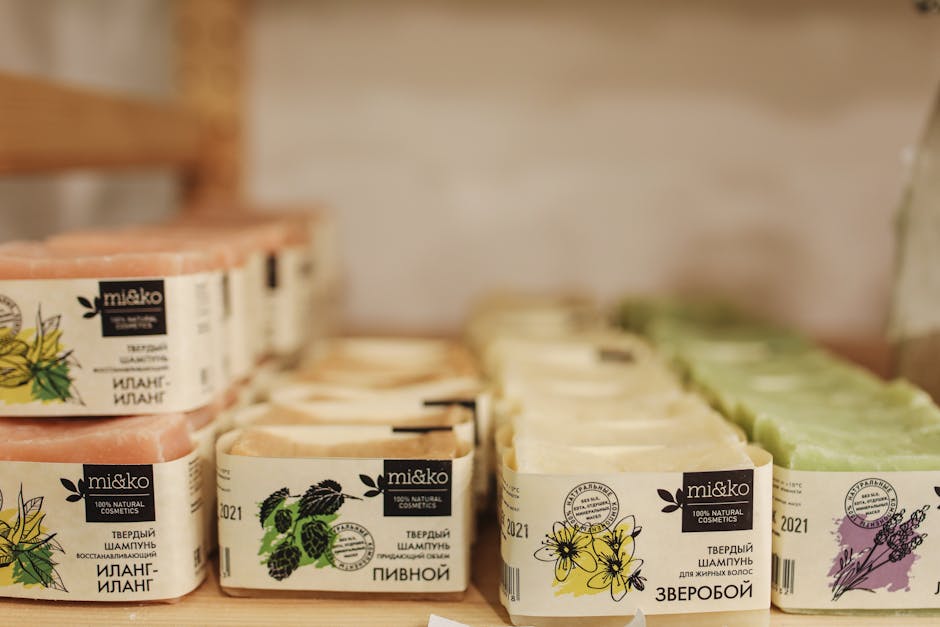
Why Choosing the Right Custom Soap Packaging Manufacturer Can Make or Break Your Brand
Knowing how to choose a custom soap packaging manufacturer for your brand is one of the most important decisions you’ll make as a soap business owner. The global bath soap market is projected to hit $27.5 billion by 2026 — and in a crowded space, your packaging is often the first thing a buyer notices.
Here’s a quick overview of what to look for:
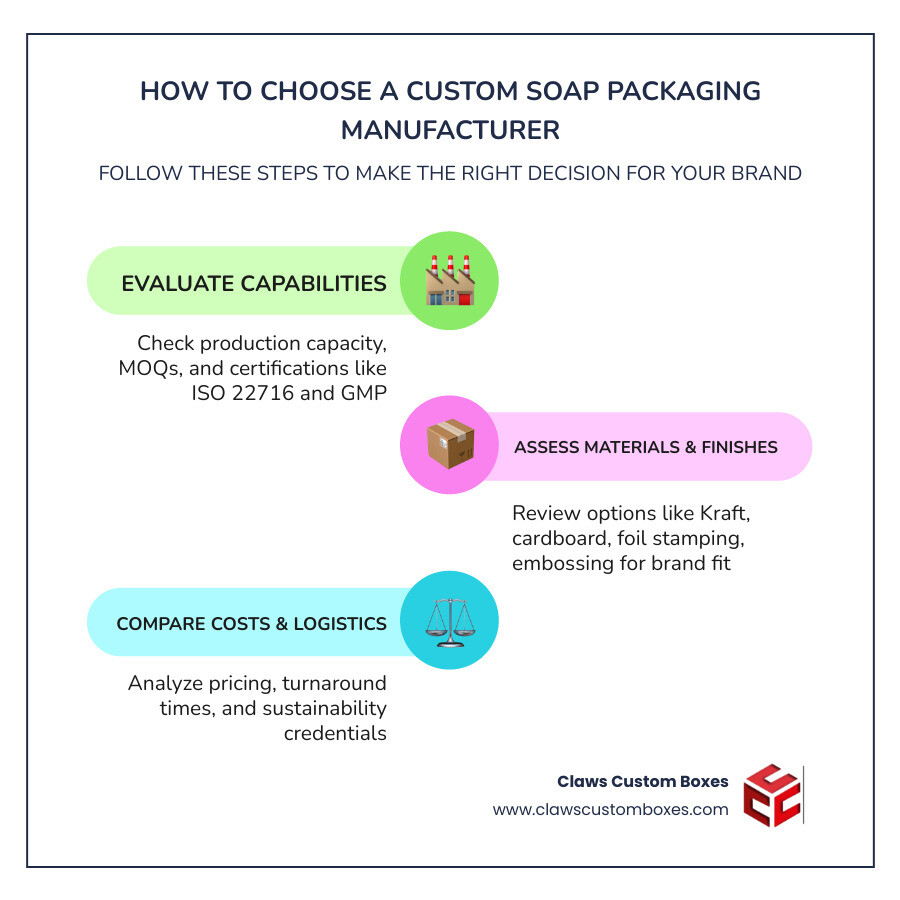
- Experience and certifications — Look for GMP, ISO 22716, and FDA compliance
- Production capacity and MOQs — Make sure they can scale with your growth
- Material and finish options — Kraft, cardboard, rigid boxes, foil, embossing, and more
- Sustainability credentials — FSC-certified paper, vegetable-based inks, compostable options
- Turnaround times — Typical production runs 2–15 business days depending on order size
- Pricing transparency — Watch for setup fees, tiered pricing, and hidden costs
- Design support — Dieline prep, digital proofs, and file format compatibility
Over 54% of consumers are more likely to buy a product with sustainable packaging. That means your packaging choice isn’t just aesthetic — it directly affects sales.
And here’s the hard truth: a bad manufacturer can cost you far more than a good one saves you. Inconsistent box sizing, poor print quality, or missed deadlines can damage your brand reputation before customers even open the box.
I’m Max Anderson, a packaging industry specialist with hands-on experience helping brands evaluate and connect with the right custom packaging partners — including navigating the exact question of how to choose a custom soap packaging manufacturer for your brand. In this guide, I’ll walk you through every factor that matters so you can make a confident, informed decision.
How to Choose a Custom Soap Packaging Manufacturer for Your Brand vocabulary:
- Foil Stamping vs. Spot UV: Choosing the Right Accents for Your Packaging
- Structural Innovations in Custom Die-Cut Packaging
- Why Small Businesses Need Custom Packaging to complete in 2026
Key Factors in How to Choose a Custom Soap Packaging Manufacturer for Your Brand
When you begin your search, it’s easy to get dazzled by pretty portfolio pictures. However, the substance of a manufacturer lies in their infrastructure and reliability. Choosing a partner isn’t just about buying boxes; it’s about securing a link in your supply chain that won’t snap when you’re under pressure.

Experience is the first hurdle. You want a manufacturer that understands the unique chemistry of soap. Soap isn’t like a deck of cards; it breathes, it contains oils that can seep through low-quality paper, and it releases fragrances that need to be preserved. Top Tips for Choosing a Private Label Soap Manufacturer? often emphasize that a manufacturer’s history with personal care products is a non-negotiable asset.
Evaluating Production Capacity and Scalability
Your brand might be starting in a home kitchen today, but where will it be in May 2026? A common mistake is choosing a “boutique” printer that can handle 500 boxes but chokes when you suddenly need 50,000 for a retail contract.
When evaluating capacity, ask about their equipment. Do they use digital presses for short runs and offset lithography for high volumes? A versatile manufacturer can offer you more info about custom packaging services that adapt as you grow. Lead times are also a critical metric. If a manufacturer has a consistent 6-week backlog, they might not have the “slack” in their system to handle your holiday rush.
Quality Control and Regulatory Compliance
In soap, compliance is everything. While the soap itself must be safe, the packaging must also meet standards to ensure no harmful chemicals migrate from the ink or glue into the product.
Look for manufacturers that adhere to:
- ISO 22716: The international standard for Good Manufacturing Practices (GMP) for cosmetics.
- FDA Compliance: Ensuring materials are safe for skin-contact products.
- Batch Consistency: Ask how they ensure the color on the first box matches the color on the ten-thousandth box.
Nearly 40% of manufacturers globally lack essential certifications like GMP. Don’t let your brand be part of the statistic that takes a risk on unverified suppliers.
Assessing Materials, Finishes, and Printing Capabilities
The material you choose is the “skeleton” of your brand. For soap, this choice is functional as much as it is aesthetic. Handmade soaps, for instance, often vary by 2mm to 5mm per bar. Your packaging material needs the structural integrity to hold these variations without tearing.
| Material Type | Durability | Eco-Friendliness | Best Use Case |
|---|---|---|---|
| Kraft Paper | High (Tear resistant) | Excellent (Recyclable/Compostable) | Organic, natural, or “earthy” brands |
| Cardboard (SBS) | Moderate | Good (Recyclable) | High-end retail with vibrant colors |
| Rigid Stock | Very High | Fair | Luxury gift sets and limited editions |
| Corrugated | Exceptional | High | Subscription boxes and shipping-heavy models |
Moisture resistance is a specific concern for soap. If your soap is “sweaty” (common in high-glycerin formulas), an uncoated paper might become soggy. This is where Soap Packaging – A Complete Guide For Soap Brands suggests looking into protective coatings that don’t compromise the “natural” feel of the product.
Impact of Finishes on Brand Perception
Finishes are the “jewelry” of your packaging. They tell the customer the price point before they even look at the tag. Using custom boxes with logo is just the start; how that logo is applied changes everything.
- Foil Stamping: Adds a metallic shimmer (gold, silver, rose gold) that screams luxury.
- Embossing/Debossing: Creates a 3D texture that encourages customers to touch the box.
- Spot UV: Applies a glossy coating to specific areas, creating a contrast against a matte background.
- Soft-Touch Lamination: Gives the box a velvet-like feel, often used by premium skincare brands.
Sustainability and Eco-Friendly Sourcing
By 2026, sustainability isn’t a “nice-to-have”—it’s a market requirement. Over 60% of skincare buyers now consider eco-friendly packaging a primary purchasing factor.
We prioritize using 100% Post-Consumer Waste (PCW) paper and FSC-certified fibers, ensuring that for every tree used, more are planted. Furthermore, using vegetable-based inks (like soy or algae inks) ensures that the packaging remains truly compostable. If your brand story is about “clean beauty,” your packaging cannot be the “dirty” secret.
Understanding Costs, MOQs, and Turnaround Times
Let’s talk numbers. Budgeting for packaging involves more than just the “per-unit” price. You have to account for setup fees, plate charges (for offset printing), and shipping costs.

Balancing Budget with a Custom Soap Packaging Manufacturer for Your Brand
Minimum Order Quantities (MOQs) are often the biggest hurdle for new brands. Some manufacturers require 5,000 units, which can tie up your capital in inventory. However, at Claws Custom Boxes, we understand the need for flexibility, often offering MOQs as low as 100 to 500 units to help you test the market.
When you’re looking at custom soap boxes, remember the “Quantity Break” rule. The price difference between 500 and 1,000 boxes is often negligible because the “setup” time for the machines is the most expensive part. Always ask for a tiered quote (e.g., 500, 1,000, 5,000) to see where the value peaks.
Logistics and Shipping Considerations
If your manufacturer is in Farmington, MI, and you are in California, shipping costs can eat your margins. We offer free shipping across the USA to eliminate this “hidden” cost.
Beyond cost, consider storage efficiency. Most custom soap boxes are shipped “flat.” This saves you massive amounts of warehouse space and protects the boxes from being crushed during transit. Turnaround times generally range from 2 to 15 business days. If you’re working with an international supplier, remember to add 30 days for sea freight—a delay that can be a nightmare for seasonal launches.
Strategic Selection and Partnership Alignment
Choosing a manufacturer is like choosing a business partner. Communication transparency is the most undervalued trait in this industry. Do they answer your emails within 24 hours? Do they provide a dedicated account manager?
In-House Production vs. Contract Manufacturing
Some brands consider DIY-ing their packaging with home printers and craft cutters. While this works for the first 50 bars, it quickly becomes a bottleneck.
- In-House: High labor cost, inconsistent quality, limited finish options.
- Contract Manufacturing: Professional-grade finishes (like Spot UV), scalable volume, and lower per-unit cost at scale.
By outsourcing to a specialist, you free up your time to do what you do best: making incredible soap.
Finalizing Your Choice of a Custom Soap Packaging Manufacturer for Your Brand
Before you sign a large contract, always request a physical sample. Digital proofs are great for checking typos, but you need to feel the paper weight and test the “fit” of your soap bar. A box that is 1.5mm too tight will add 40 minutes of frustration to every 1,000 units you pack.
Check references! A reputable manufacturer should be able to point to other successful brands they’ve helped scale. This ensures they can handle your brand’s Unique Selling Proposition (USP) and adapt to market shifts as we head further into 2026.
Frequently Asked Questions about Soap Packaging
What is the best packaging material for handmade soap?
For handmade soap, Kraft paper is often the gold standard. It is breathable, which allows “cold process” soaps to continue curing even while on the shelf. It also has natural oil resistance. If you want a more “premium” look, a 16pt or 18pt Cardboard (SBS) provides a smooth surface for high-resolution graphics while remaining sturdy enough for retail stacking.
How do minimum order quantities (MOQs) affect small brands?
High MOQs can be a “cash flow killer.” If a manufacturer forces you to buy 5,000 boxes for a scent you’ve never tested, you risk being stuck with “dead inventory.” Small brands should look for manufacturers with MOQs under 500. This allows for “market testing”—running small batches of different scents to see which one sells before committing to a massive wholesale run.
Why is sustainable packaging important for soap brands in 2026?
Consumer psychology has shifted. In 2026, shoppers view packaging as an extension of the product’s ingredients. If you sell “organic, vegan soap” in a plastic-laminated, non-recyclable box, you create “brand dissonance.” With 54% of consumers actively seeking sustainable options, eco-friendly packaging is no longer a marketing gimmick—it’s a survival strategy.
Conclusion
Mastering how to choose a custom soap packaging manufacturer for your brand requires a balance of logic and vision. You need a partner that offers the technical precision of ISO-standard manufacturing but also understands the creative soul of your brand.
At Claws Custom Boxes, we specialize in bridging that gap. From our Michigan-based facility, we provide high-quality, eco-friendly solutions tailored to the unique needs of the soap industry. Whether you need custom soap boxes for a new launch or you’re ready to order custom boxes wholesale for a national retail roll-out, we offer the 24/7 support and sustainable materials your brand deserves.
Don’t leave your first impression to chance. Choose a partner that values your brand’s growth as much as you do. Reach out to us today, and let’s build packaging that doesn’t just hold your soap—it sells it.